Best eCommerce Platforms for Startups & Small Businesses

Are you a small business owner looking for the best eCommerce platforms for startups? The fact is, there are so many eCommerce solution providers available in the market. The fact is that the ecommerce platforms are increasing day by day, reaching $7 trillion by the end of 2026. So investing in this platform is the right time for small business owners. To do that, you need a fresh start.
A fresh start will be the choice of the best ecommerce platform . But to choose the best one for you is definitely not a piece of cake. You need a lot of time and research.
In this article, we will give you an ultimate guideline to find the best eCommerce website builder. You will also get a list of the 10 best eCommerce Platforms for small businesses.
So let's start.
What Is An eCommerce Solution?
An eCommerce solution is a complete package to fulfil the technical, business, and legal functions of a business. It handles all tasks, from securing a website to marketing products or services, and maintains privacy.
The platform lets you create an e-commerce store with or without any coding or web design knowledge. But of course, you need to choose the best eCommerce website builder to get a good ROI.
Do you know that the idea of e-commerce was first invented in the late 70s? It’s surprising, right? Michael Aldrich first conceived the idea of online shopping in 1979.
After that, the invention of the internet gave the idea a real form. And now it’s the era of digitalisation; almost everyone around the world has a mobile phone and access to the internet. Therefore, eCommerce platforms become more versatile and, at the same time, open doors of opportunities.
Why eCommerce Startups Fail in A Few Months - Real Reason
We know that growing a business is more challenging than starting one. However, the failure rate in eCommerce startups is about 90%. Do you know why? Well, the main reason is the lack of a suitable and appropriate e-commerce platform. An inappropriate platform leads to inadequate online marketing, social media marketing and the absence of SEO. This ultimately results in business failure. On the other hand, poor marketing strategy, weak team management, and lack of budget are other reasons for collapse.
So, it’s clear that you can be in the rest 10% if you use a worthy platform to create your eCommerce website and app, and at the same time have good management and adequate budget.
Another research shows that 36% of small businesses still don’t build a website for their online presence. Therefore, you can take this opportunity and move your business forward.
What Are the Types of eCommerce Platforms?
From running an online clothing store to selling electronic gadgets online, every business owner needs an appropriate platform to manage their business. Therefore, many e-commerce solution providers target this extensive market and offer their services. However, they have their own different approaches to meet different kinds of needs. Some specialise in being the best eCommerce platforms for startups, and others serve giant industries. If we generalise, we can identify three main types of e-commerce platforms.
Open Source
Open-source eCommerce platforms are popular among the best online businesses that have their own development teams. In this platform, you can use and modify the available code. WooCommerce, OpenCart, Magento, etc., are examples of this kind of platform.
If your business offers unique products or services, it's best to use an open-source platform. Moreover, the platform will give you greater freedom and unique looks than a SaaS or CaaS solution. But you have to remember that this solution takes a long time to get started and is also very costly. So, you should not consider it as one of the best eCommerce platforms for small businesses if you are not a programmer.
SaaS
The most convenient eCommerce service is SaaS (Software-as-a-Service). It takes only a few months to set up an e-commerce store, and the cost is also very affordable. Here, all you have to do is simply buy a readymade eCommerce website and customize it. Isshue, Shopify, BigCommerce, etc., are SaaS-type eCommerce platform providers.
If you use the SaaS platform, you don’t have to worry about any coding segment. Within a friendly budget, you will get a secure and scalable website. Therefore, it is viewed as one of the best eCommerce platforms for startups.
CaaS
CaaS is a relatively new term in the e-commerce world. The complete form of CaaS is Commerce-as-a-Service. It’s the mixed-up version of open source and SaaS platforms. In CaaS, your business data moves to the cloud, but the maintenance of front-end software remains in your hands.
What are Some Key Features of eCommerce Solutions?
An eCommerce solution controls your overall ecommerce business. From selling to managing employees and customers, you can do all the things with a single platform. Now, it’s time to see the features of the eCommerce platform.
Mobile-Friendly Website
According to Statista, the global smartphone market is projected to reach US$503.06bn in revenue by 2026, growing at a CAGR of 3.86%. That means more than half of your customers visit your eCommerce store on mobile devices. So your website must be mobile-friendly.
On the other hand, Google also wants a mobile-friendly website and gives a better ranking position. The most significant opportunity you will get with eCommerce platforms is a mobile-friendly website. As it’s one of the most important factors, no eCommerce website builder develops a website without this feature.
Photo Management System
Does a customer buy your product with only a simple photo? The answer is no. Nowadays, everyone looks for a 360° image while purchasing a product. That’s why eCommerce platforms are focusing on attractive photo management systems.
Generally, viewers read less and see more. Therefore, you need to take detailed photos and display them attractively. An e-commerce platform will provide you with the service.
Product Management System
An eCommerce solution does the task of hundreds of employees. A significant example is product management. This feature will help you monitor all product information, including available quantities, prices, stock levels, and more. Therefore, you will keep your eCommerce store up to date.
However, no matter how many stores you have, you can keep track of them all through a centralized system. This will help your online business run smoothly without causing any confusion.
Warehouse & Stock
If you have multiple warehouses, you can monitor them all. Continuous monitoring will ensure you are never out of stock. Besides, you can also check which items are popular and which are not.
The warehouse and stock management facility not only provides an accurate overall picture of your business situation but is also a crucial variable for decision-making.
Advance Payment Options
The best eCommerce platforms offer multiple payment channels and gateways. You can integrate both local and international payment methods.
After considering your buyers and business place, you can customise the payment option.
Customer Relationship Management
CRM is another essential factor for improving business value. There is a saying that the customer is the king. However, the satisfaction of regular customers not only drives profits but also attracts other potential buyers.
An eCommerce solution tracks transaction records, customer details, and other data. It will help you identify your regular shoppers so you can systematically provide special discounts, offers, membership accounts, and more to your customers.
Integrated Marketing Tool
Email and SMS marketing are modern approaches to reach potential customers. And an excellent form to build relationships with shoppers, too. The best eCommerce website builder keeps that in mind when creating a system.
With this feature, you can store the email addresses and phone numbers of individuals and send them promotional messages whenever you need.
Responsive and Secure Website
A simple, responsive website is key to the success of an e-commerce site. In online shopping, your customers first visit your website, and if the interface is hard to use or takes too long to respond, they simply move on. The fact is, there are hundreds of other options available.
However, an eCommerce solution comes with an easy-to-use website, so you will get this facility automatically. On the other hand, an e-commerce platform is built to ensure the highest security. It has two-step verification, captcha security, password protection, etc. These things will protect your system.
Multiple Store Management System
Your startup may conduct work at multiple business locations. At that time, an eCommerce platform will bring them under one roof. Besides, if your system supports individual accounts for each store, each store can act independently. At the same time, sync with the central system too.
The complete process lets you be informed about the current situation, regardless of your physical location.
POS System
Even if all eCommerce stores do not have outlets, you can still use the POS system if you do. This feature will assist you with all the tasks needed to run a shop. Like, you can scan a product's barcode, calculate the bill, and print an invoice.
However, this feature will also help you manage online orders. You just have to create an invoice and ship the product to the customer’s address.
10 Best eCommerce Platforms for Startups & Small Businesses
The following segment is the core part of our article. Here you get the suggestion of the top 10 best eCommerce platforms. This list is prepared by focusing on low-budget, high-feature, and startup-friendly options. So let’s start!
Isshue
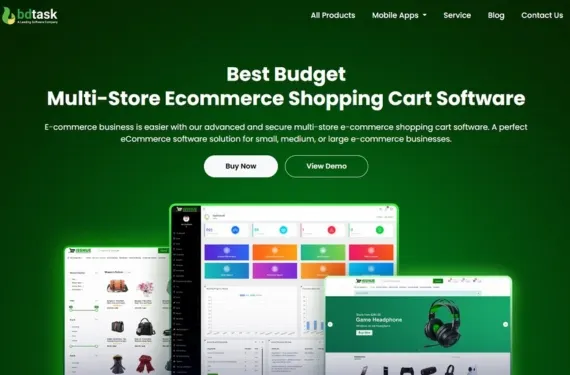
The first one on our list is Isshue. It is a self-hosted eCommerce platform. The software was developed using the CodeIgniter framework. It’s a complete package to run an e-commerce shop. Besides, the software is compatible with IE11, Firefox, Safari, Opera, Chrome, and Edge. Moreover, there is no monthly charge needed for this solution. You can get the software with a one-time payment.
You might wonder why we give this software the first position, right? Well, we prepared this list for small business owners. For this reason, we examine which platform has the lowest price rate and, at the same time, has suitable characteristics. Therefore, we keep Isshue for its outstanding features at a price under $50.
So, let’s see what advantages you can get from the software and whether it has any shortcomings.
Expanded Features:-
- Fast and secure eCommerce platform
- Clean and understandable source code
- Easy customization
- User-friendly interface
- Built-in SMS and Email marketing tools
- All types of payment gateways and channels
- Easy customization
- Budget-friendly software
- Eye-catching design
- Multiple stores
- POS management system
- Quotation management system
- Product, purchase, and vendor management system
- CRM features
- Warehouse and Stock monitoring
- Integrated eCommerce Android app
- Online and offline order
- SEO Friendly Website
- Supply management
Limitations:-
Fortunately, there is no downside to this software to date, except that you have to buy your own web hosting and a domain. But according to the price, the services are satisfactory. Moreover, the software is regularly updated, and the developer teams are very attentive to details. If any customers encounter difficulties, they resolve the issue immediately.
Shopify

Shopify remains one of the top SaaS eCommerce platforms in 2026, favoured for its simplicity, speed, and scalability. Starting at around $29/month (Basic plan), it provides hosted solutions with unlimited products, a vast app ecosystem (8,000+ integrations), built-in AI tools (Shopify Magic for descriptions and personalisation), multi-channel selling (social, marketplaces, POS), and strong analytics. No coding is needed—drag-and-drop themes make setup quick for beginners.
It excels in omnichannel experiences, 24/7 support, automatic updates, and PCI-compliant security. Transaction fees are 0% with Shopify Payments. Perfect for startups and growing DTC brands needing reliability and fast launches. Drawbacks include potential add-on costs for advanced features and less flexibility than open-source options. In 2026, it's consistently ranked #1 among small businesses for ease and ecosystem strength.
Example of a website using Shopify: Mount Vernon
Expanded Features:-
- Fastest load time
- Super easy customization
- Reasonable price
- iOS and Android POS app
- Unlimited product selling
- customer relationship management
- Multiple sales channel
- Built-in fraud analysis feature
- CRM feature
- Editable HTML and CSS file
- Built-in mobile shopping cart
- Utilize Shopify blog
- From Bitcoin to PayPal (100 payment gateways)
- Support 50+ languages
- Analytics feature
- Products management system
- Store management system
Limitations :-
Despite the popularity, Shopify has some shortcomings. The first is that it is not affordable for low-budget startups, as apps are expensive, and it lacks adequate SEO and marketing features.
Magento
Magento, rebranded as Adobe Commerce, is a powerful open-source (Community Edition) or enterprise SaaS platform suited for medium to large businesses with complex needs.
The free Community version offers high customisation, advanced SEO, multi-store management, robust inventory/CRM tools, and extensive extensions. It supports B2B/B2C hybrids, personalised experiences, and scalability for high-volume catalogues.
However, it requires significant technical expertise (developers for setup, hosting, and maintenance), leading to higher costs over time (hosting, extensions, and dev work). The paid Adobe Commerce version adds cloud hosting, AI features, and support. In 2026, it's best for established brands needing deep customisation, but less ideal for pure startups due to complexity and a steep learning curve. Great if you have IT resources; otherwise, it can slow launches.
Example of a website using Magento: SIG SAUER
Expanded Features:-
- Marketing and promotional tools
- Strong search engine optimization
- Site management
- Order management
- Customer account
- CRM features
- Support for localization
- Analytics and reporting features
- Mobile-supported website
- Content management system
- Manage and schedule System backup, database backup, and media backup
- Customer information management
- Order tracking widget
- Strong data encryption and password protection
Major Drawback
Small business owners can utilise the free form of Magento. Despite that, the themes are a bit pricey. And the platform slowed down sometimes. On the other hand, as it is an open-source solution, you need development skills to build a website.
OpenCart
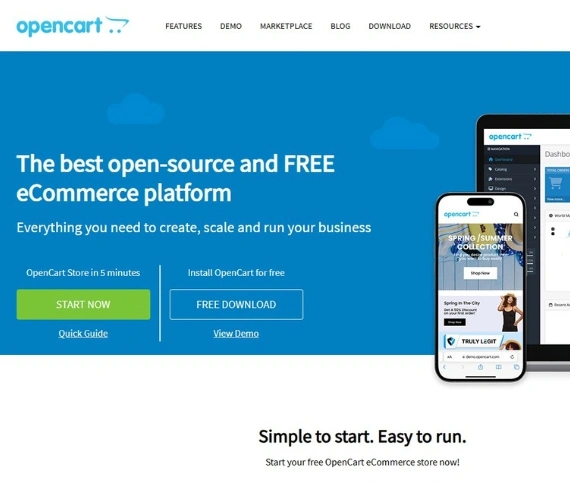
OpenCart is another free and open-source eCommerce platform. It is a PHP-based solution that uses a MySQL database. Though it’s called free software, in practice it's not at all. The reason is that you first need web hosting, a domain name, and then an SSL certificate. After that, you will need to purchase add-ons to make your website fully operational.
Example of a website using OpenCart: Sportwing
Expanded Features:-
- Exclusive administrator dashboard
- Advanced user management system
- Manage multiple stores
- Extra product variables.
- Inbuilt affiliate system
- Offer discount coupons
- Backup and restorations
- Product management
- CRM features
- Multi-currency and multi-language
- Email-marketing campaign tool
- Integrated shipping method
- Sales analysis & generating reports
- Responsive website
- SEO features
- Add & track marketing campaign
Major Drawback
Like the other open-source platforms, the major drawback of OpenCart is that it requires knowledge to develop your eCommerce store. On the other hand, the add-ons are often expensive.
BigCommerce
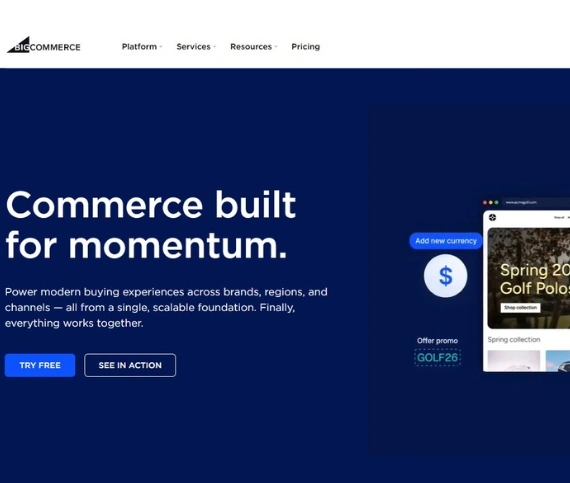
BigCommerce is a powerful SaaS platform that is built for scalability without relying heavily on apps. Plans start around $29/month, offering unlimited products/bandwidth, no transaction fees (even on lower tiers), multi-channel selling, advanced SEO/marketing tools, multi-currency, and strong B2B features. It includes native integrations for payments/shipping and excels in headless commerce for custom frontends.
In 2026, it's praised for enterprise-grade tools at SMB prices, automatic updates, and high performance. Great for growing businesses, helping avoid app sprawl (e.g., inventory and promotions built in). Cons: Slightly steeper learning curve than Shopify and fewer free themes. Top choice for brands scaling quickly with predictable costs and less customisation overhead.
Example of a website using BigCommerce: Berlin Packaging
Expanded Features:-
- Inventory management system
- Categorized customer group feature
- Various shipping methods
- Easy creation and management
- 24/7 support from BigCommerce
- SEO tools
- Google shopping integration
- Get traffic within the site blog
- Apply filters in the search bar
- Well-built CRM features
- Easy to create custom fields
- Support multiple currencies
Major Drawback
The most significant shortcomings of BigCommerce is, it has sales limits. If you cross the boundaries, you need to go for a more expensive package. On the other hand, the free templates are not that unique and a little bit hard to edit.
WooCommerce
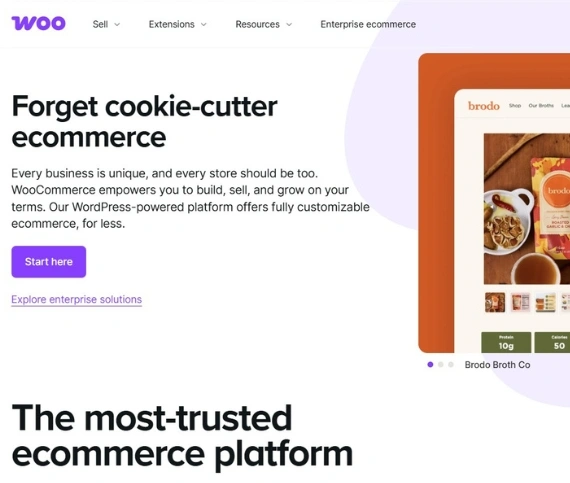
WooCommerce is the most popular WordPress plugin used by millions of online store owners. It’s a customizable, open-source platform with all the features to get your eCommerce business up and running quickly. If you have a skill in WordPress, then you can go for this platform without any hesitation.
If you want to shape your eCommerce business plan using the WooCommerce platform, you will get a lot of flexibility and become a part of a large community. In the following segment, you will see what the advantages of this renowned eCommerce platform are and whether this platform is favourable for all kinds of online shops or not.
Example of a website using WooCommerce: Jackbox games
Expanded Features:-
- Customizable themes
- Access to the CSS, HTML, and PHP code
- Suitable for affiliate marketing
- Secure gateways and e-wallets
- Features for marketing
- Support 24 different languages
- Create categorized contents
- WooCommerce Shipping method
- Run and manage multiple stores
- Points, rewards, and gifting features
- Built-in WordPress blog
- Integrated SEO tools
- upsells and cross-sells
- Newsletters system
- Email marketing tool
- Money refund policy
Major Drawback
Besides the problem of knowledge development, the large number of plugins can sometimes confuse less experienced users. On the other hand, installing too many extensions slows down the system, and they are also costly.
Squarespace
Squarespace is another popular SaaS-based eCommerce platform for building and hosting websites. The service is famous for its eye-soothing design. It offers 100+ flexible, responsive themes for customisation. Moreover, the price is also affordable compared to the previously mentioned platforms. The packages range from $12 to $40 when paid annually. They also offer monthly packages that cost a bit more.
Example of a website using Squarespace: SM Wholesale USA
Expanded Features:-
- Customizable with unlimited design options
- Blogging tools
- Built-in SEO tools
- Analytics in-depth features
- Integrate popular apps
- Customizable page and layouts
- CSS editor for adding CSS code
- Create and edit blog posts
- Create & manage an eCommerce store
- Product management
- Manage the POS system
- Multiple payment methods
- Support multiple currencies
- customer relationships management
- In-built marketing tools
- Email and social media promotion
Major Drawback
One shortcoming of this service is that its page loading time is much longer than that of other platforms. On the other hand, it cannot support multilingual websites or large websites with many options.
Wix
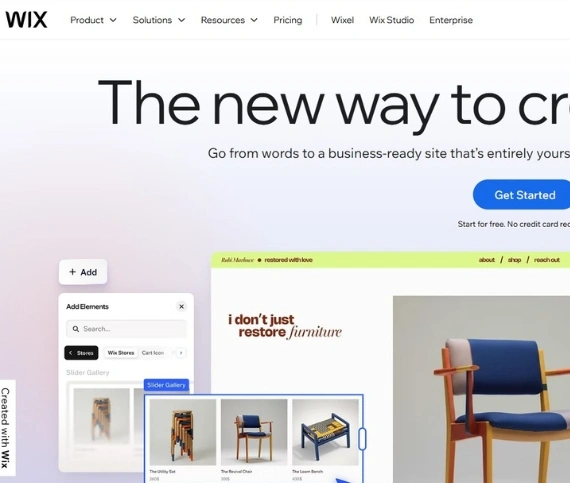
Wix is a user-friendly drag-and-drop website builder with robust eCommerce capabilities (Wix Stores). Plans start around $27/month for Business plans, offering customizable templates, animations, mobile editing, built-in SEO/marketing, inventory/POS, and multi-channel selling. No transaction fees on higher tiers.
In 2026, it's great for beginners wanting quick, visually appealing stores without coding—ideal for small creative or service-based businesses. Features include AI tools for site building and a strong mobile focus. Cons: Template switching is restricted, there may be speed issues with heavy customisations, and it is less scalable for large inventories. Excellent entry-level option for non-tech users prioritising design and simplicity.
Example of a website using Wix: Doughnuttery
Expanded Features:-
- Unique functionality & add animation
- Provide personalized SEO plan
- Mobile editor
- Wix editor
- Wix ADI
- Strong analytical tool
- Web hosting & SEO system
- 24/7 customer support
- Get automatic site backup
- Easy integration
- Wix free version
Major Drawback
Page loading time is the biggest issue with Wix, too. Moreover, it has another major drawback: you can’t switch to another template after choosing one.
BigCartel
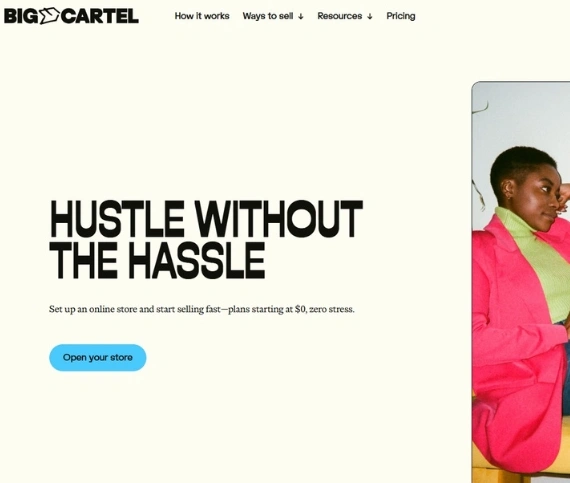
Do aesthetic products need extra attractive templates to showcase their art? BigCartel considers its target audience and reaches it. It’s an eCommerce platform specially built for running creative businesses. However, you can use it in any type of small eCommerce store. At a lower cost, the service offers artistic templates that are perfect for creative business owners.
The fact is, BigCartel's mission and vision are to stay focused on small companies. Since 2005, they have provided platforms to sell t-shirts, merchandise, art, jewellery, and more.
Example of a website using BigCartel: Colour Code
Expanded Features:-
- Free plan availability
- Easy to build a website
- Order management feature
- 16 pre-built themes
- All the system apps from the app store
- Developers & edit the HTML and CSS codes
- Integrated with Facebook
- Available support team
- Google Analytics integration
- Multiple payment methods
Major Drawback
As the platform is built for only small-scale businesses, you can’t make a big website with it. Besides, the customization option is very limited, so flexibility is the biggest shortcoming for BigCartel. But in the end, it’s a good choice for building a small and creative website.
Volusion
We come at the end of our list, and the last one is Volusion. It’s one of the most popular eCommerce platforms that is used by millions. It’s a website builder that hosts your eCommerce store. You just need to build the website and upload your product, and Volusion will do the rest.
The platform is basically favourable for small to medium-sized businesses. It will be an excellent solution for your startup to get started quickly, with no coding experience required. However, you can check their 14-day trial version before using any of their packages.
Example of a website using Volusion: Game Bibs
Benefits You Will Get
- Responsive themes
- Powerful content editor tool
- Categorised product page
- Advanced search filter
- Order management system
- Stock and product management
- Multiple gateways & payment
- Upsell features
- customer management
- Integrated mobile app
- Powerful SEO tools
- Facebook, eBay, and Amazon integration
- Report management
- 24/7 support
- Newsletter feature
- ROI tracking
- Social account linking system
Major Drawback
The major drawback of Volusion is that it requires add-ons for essential features like CRM at a different price. Another thing is, the number of themes is fewer according to their cost, and they also don’t support any third-party plugins.
Things to Consider to Pick the Best Ecommerce Platform
So now that you understand what kinds of facilities you can get with an eCommerce solution, it’s time to see how you can decide the best one. Here are some points that should not be overlooked while picking up a platform.
Budget
The first thing you need to consider is the cost of eCommerce software. Select the one within your budget and have all the functionalities to support e-commerce for startups.
Therefore, when choosing an eCommerce platform, first determine the cost range and then prioritise your needs. But remember the additional cost too. Buying a solution does not mean buying an eCommerce PHP script and installing it. You need to consider the process of customisation and training.
Site Design
A potential customer picks the best online business based on how stunning their website is. As mentioned above, no buyers will browse your website if it’s hard to follow. Besides, an e-commerce store is all about graphics. You need to create an eye-catching interface and display impressive photos of your products.
For these reasons, the site design of a website development is an essential factor that should not be overlooked.
SSL Certificate
Basically, SSL, or Secure Sockets Layer, is a protocol that establishes a secure connection. SSL encryption ensures that the user’s confidential information, such as credit card numbers, remains secure.
On the other hand, the Google search engine does not allow an e-commerce site without SSL encryption. So make sure your website has the certificate and gain trust from everyone.
Easy Customization
We keep saying your website needs to look easy to the buyer. But the fact is, it needs to be handy for you too. Before picking an e-commerce platform, see its demo version. It will give you the idea of customisation. A custom website is the key to representing your brand and enriching the brand value.
However, also check whether the service provider offers additional support. If you face problems, it will be helpful to get help from the developer site.
Choose the Best eCommerce Platforms for Small Business
Selecting an eCommerce platform isn't just about features; it's about aligning with your business stage, budget, and goals. For startups, where technical resources might be limited and costs sensitive, prioritize platforms that offer quick setup and local relevance. Here's a breakdown of key factors:
|
Software Name |
Best For |
|
Best eCommerce platform for startups and small businesses for one time payment method. |
|
|
Shopify |
Best eCommerce platform for medium-sized businesses |
|
Magento |
Best for businesses that have their own developer team |
|
OpenCart |
Startup owners who have previous development knowledge |
|
BigCommerce |
Built-in features |
|
WooCommerce |
WordPress platform |
|
Squarespace |
Building small websites |
|
Wix |
Best for creating small websites for free |
|
BigCartel |
Creative small businesses |
|
Volusion |
Best for small to medium sized business |
Why Isshue is the Best eCommerce Platform for Small Businesses
By the time you see the list of the top 10 eCommerce platforms, you will also have the guidelines to make a user-friendly website. Now, it’s time to tell which one is the best in our opinion.
We chose Isshue as the Best eCommerce platform for small businesses 2026 for its remarkable features and one-time payment methods. Previously, we saw that every other platform offered services on a monthly or annual basis, and the cost was much higher than purchasing Isshue with the complete source code.
As a small business owner, you can build your website with the necessary functionalities without coding knowledge. The customisation is so easy, and you also get support from the service provider. Besides, if you have coding knowledge, you can utilize the coding segment too.
So, we give our vote to the Isshue Multi-Store eCommerce Shopping Cart Solution after analysing all aspects.
Final Words
The market researcher believes that 95% of all purchases will be made through e-commerce by 2040. Undoubtedly, it’s high time to choose the best eCommerce platforms for startups and choose the best one. The best ecommerce platforms help to dominate your competitors and increase the brand value and customer satisfaction.
We hope this article will help you pick a suitable platform. So, don’t be late. Make a unique strategy and use the best eCommerce website builder; hopefully, you will soon be able to compete in eCommerce!
Frequently Asked Questions (FAQs)
What Is The Best Ecommerce Platform for Startups In 2026?
Issue is widely regarded as the best overall for most startups. It offers the easiest setup and is easy to manage the functions of the website. In Bangladesh, isshue stands out due to reliable plugins for bKash and Nagad.
Shopify Vs Woocommerce: Which Is Better for a Small Business In 2026?
Shopify wins for most beginners and non-technical users: faster setup (launch in days), all-in-one hosting/security, 24/7 support, and predictable costs ($29+/month, 0% transaction fees with Shopify Payments). WooCommerce is better if you already use WordPress, want full customization, and prefer no platform fees (only processor fees). But if you want overall performance, then Isshue will be the good to go partner for any e-commerce business.
How Important Is Bkash And Nagad Integration For Bangladesh Startups?
Extremely important—over 80% of online payments in Bangladesh use MFS like bKash (market leader) and Nagad. Without them, conversions drop sharply.
Can I Start with Zero or Very Low Upfront Cost?
Yes. Start small, validate your idea, then upgrade. Most platforms offer 14–30 day free trials—no credit card needed for many.
Do I Need to Worry about Security and PCI Compliance?
All major platforms (Shopify, Isshue, Wix, BigCommerce, Squarespace, Ecwid) handle PCI compliance automatically (Level 1).
Can I Sell on Social Media or Multiple Channels?
Yes—Shopify and Ecwid excel at multi-channel (Instagram, Facebook, TikTok Shop, Amazon, etc.).
What about Mobile Optimization And Bangladesh-Specific Challenges?
All top platforms are mobile-responsive (essential—90%+ BD traffic is mobile). Test on low-bandwidth connections.
Is AI Important in 2026 Ecommerce Platforms?
Yes—Shopify leads with AI for auto-descriptions, recommendations, and chatbots.
Any Tips for Dhaka/Bangladesh Startups Specifically?
- Prioritise bKash/Nagad + COD (collect small advance via MFS to reduce returns)
- Use local couriers (Pathao/RedX APIs)
- Start with niche products (handicrafts, fashion, local goods)
- Leverage Facebook/Instagram ads (huge reach in BD)
- Test with free trials and a small inventory
- Comply with NBR VAT rules—platforms like Shopify have tax tools

Contents
- What Is An eCommerce Solution?
- Why eCommerce Startups Fail in A Few Months - Real Reason
- What Are the Types of eCommerce Platforms?
- What are Some Key Features of eCommerce Solutions?
- 10 Best eCommerce Platforms for Startups & Small Businesses
- Isshue
- Shopify
- Magento
- OpenCart
- BigCommerce
- WooCommerce
- Squarespace
- Wix
- BigCartel
- Volusion
- Things to Consider to Pick the Best Ecommerce Platform
- Choose the Best eCommerce Platforms for Small Business
- Why Isshue is the Best eCommerce Platform for Small Businesses
- Final Words
- Frequently Asked Questions (FAQs)


Pay With


